


I Spent 47 Hours Building a Mining Profitability Model. Here’s What I Found.
The spreadsheet didn’t lie. But it nearly cost me my marriage.
It started with a simple dinner question.
“So what’s the actual ROI on those mining machines you keep talking about?”
I said the four most dangerous words in personal finance:
“Well… it depends.”
Forty-seven hours later, I had 23 Excel tabs, 4,847 formula cells, and a model detailed enough to make an energy economist proud. I also had a wife who gently suggested I might want to “go outside for a bit.”
Worth it. Because now I have clarity.
The Model That Took Over My Life
Before this, I used online profitability calculators for quick estimates. They’re useful for snapshots. But I wanted to understand the engine under the hood.
So I built my own model from scratch.
I analyzed 34 variables across hardware, electricity, network difficulty, price, uptime, fees, and financing. Then I stress-tested everything using multiple scenarios and Monte Carlo simulations.
Here’s what actually matters.
The Variables That Truly Drive Profit
After ranking every factor by impact over a 36-month horizon, the results were brutally clear.
Tier 1: The Big Four (about 85% of the outcome)
Electricity cost ($/kWh)
Hardware efficiency (J/TH)
Network difficulty trend
Bitcoin price
Tier 2: Meaningful Adjustments (about 12%)
Uptime percentage
Cooling overhead
Pool fees
Hardware purchase price
Tier 3: Mostly Noise (about 3%)
Transaction fee variance
Minor firmware tweaks
Exotic optimizations people argue about online
Most of what miners obsess over barely moves the needle. The first four variables decide almost everything.
How the Model Was Built
I structured the model like a financial system, not a hobby spreadsheet.
Data sources included manufacturer specifications, historical network data, public energy pricing, and long-term price and volatility trends. Difficulty projections were based on historical regression from the past several years.
The workbook included:
A hardware database with dozens of ASIC models
A location matrix covering multiple electricity price scenarios
A difficulty engine with three growth paths
Three Bitcoin price paths
Per-machine sheets generating nine scenario combinations each
NPV, IRR, and break-even calculators
A Monte Carlo simulator running 1,000 randomized outcomes
This wasn’t guesswork. It was risk modeling.
What the Numbers Changed My Mind About
The gap between older and newer-generation machines is no longer marginal. At scale and over time, efficiency now determines survival.
A difference of just a few joules per terahash can translate into thousands of dollars per unit over several years. In bear markets, efficient machines keep running while inefficient ones shut down.
- Electricity Cost Is a Cliff, Not a Slope
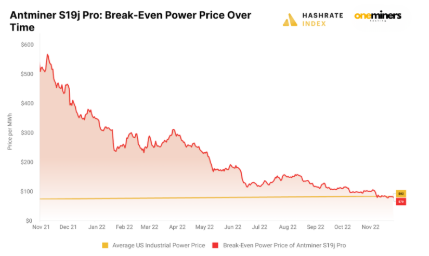
I expected a smooth decline in profit as electricity prices increased. Instead, the model showed a sharp break point.
Around $0.12–$0.14 per kWh, profitability often falls off a cliff. Above that level, many operations are effectively mining to pay the power bill.
- Uptime Quietly Destroys Returns
Most simple calculators assume perfect uptime. Real life doesn’t.
The difference between 98% and 88% uptime on a single machine over a year can mean over $1,000 in lost revenue. Downtime from overheating, reboots, power issues, or poor infrastructure adds up fast.
This is why professionally managed environments with strong operational standards can dramatically change long-term results compared to improvised home setups.
Scenario Analysis: Bull, Base, and Bear
I ran nine combined scenarios using three price paths and three difficulty growth paths over 36 months.
In the base case — moderate price growth and moderate difficulty growth — a modern efficient machine with competitive power rates produced a strong positive NPV and a high double-digit IRR.
In bullish scenarios, returns became extreme.
In bearish scenarios with fast difficulty growth and weak prices, losses were very possible.
The key insight: mining is not “always profitable,” but under realistic assumptions, the probability of a positive long-term outcome was much higher than I expected.
Geography: Where You Mine Matters More Than You Think
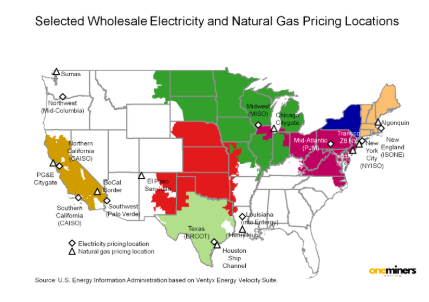
I compared a wide range of electricity environments, from typical residential rates to large-scale industrial setups.
At standard household power prices in many regions, home mining struggles unless electricity is unusually cheap. In high-cost areas, it often becomes unworkable.
At scale, professionally operated facilities with low power costs consistently outperformed small home setups once I accounted for:
My own time
Infrastructure investment
Cooling systems
Operational risk and downtime
Past a certain size, economies of scale start to dominate.
One surprise: financing sometimes improved IRR even when the total cost was higher.
By spreading payments over time, capital stayed available for other opportunities. When I discounted cash flows properly, certain payment structures produced better internal rates of return than paying everything upfront.
My old instinct said “avoid installments.” The model said “it depends on your cost of capital.” The model won.
Sensitivity Analysis: What Breaks Profitability
When I stress-tested variables individually, electricity cost and hardware efficiency dominated everything else.
Bitcoin price mattered a lot, but efficiency determined how long a machine could stay above break-even as difficulty increased. In downturns, inefficient machines dropped below profitability first. Efficient ones stayed alive longer.
Conclusion: Mining Is a Game of Margins, Not Hype
After 47 hours of modeling, thousands of formulas, and more scenario testing than I ever want to see again, one thing became clear: Bitcoin mining is not magic, and it’s not madness. It’s math.
Profitability doesn’t come from chasing tiny tweaks or obsessing over minor settings. It comes from getting a few major decisions right — especially electricity cost, hardware efficiency, and operational reliability.
Mining behaves less like a lottery ticket and more like a high-volatility infrastructure investment. There is real risk. Bear markets, rising difficulty, and poor operations can absolutely lead to losses. But with efficient hardware, competitive power rates, and strong uptime, the odds shift significantly.
The biggest mindset shift for me was understanding the difference between profit and survival. Cheap electricity maximizes upside in good times. High efficiency protects you in bad times. The operators who last through multiple cycles aren’t the ones who got lucky once — they’re the ones who built systems that can stay above break-even when conditions get tough.
So yes — after all the charts, simulations, and sleepless spreadsheet nights — I would mine.
Just not blindly.